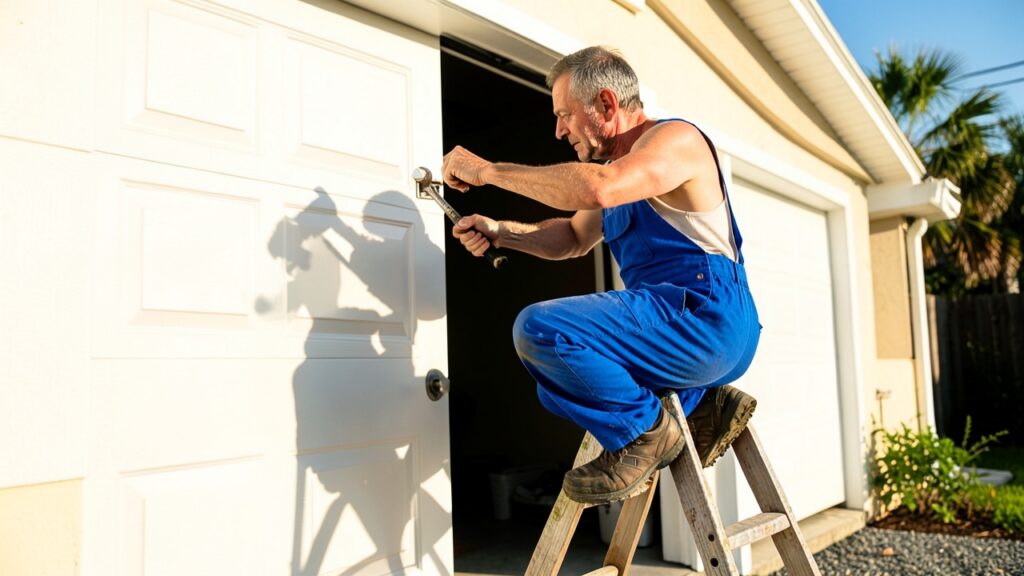
Looking for Garage Door Repair in Your Area? Here’s When to DIY and When to Call a Pro
July 15, 2026 — DIY Guides
After 2000+ garage door repair jobs, I can tell you exactly why so many homeowners get stuck trying to fix their doors themselves—and when that’s a problem waiting to happen. I’d say nearly half the calls I get come from folks who’ve started a repair thinking it was a simple job, only to find themselves facing snapped springs, warped tracks, or cables that are dangerously frayed. What most people don’t realize is that garage door components can be far more complex and hazardous than they appear at first glance.
Table of Contents
- What Sets Expert Garage Door Repair Apart from DIY Fixes
- How to Spot Garage Door Problems Before They Become Emergencies
- Affordable Garage Door Repair: What Really Works Without Hidden Costs
- Proven Tips to Avoid Costly Mistakes in Garage Door Repair
- How to Spot Garage Door Alignment Problems Early
- What Causes Garage Door Problems You Can’t Ignore?
- Summary and Call-to-Action: What Should You Do Next for Your Garage Door Repair?
I’ve been licensed and insured for 18 years—that context matters here. Over those years, I’ve learned to spot the fine line between repairs that a savvy homeowner can tackle safely and those that absolutely require a bonded professional. This is especially true when dealing with high-tension parts like springs or the intricate alignment of garage door tracks. The short answer? Not all garage door repairs are equally DIY-friendly, and knowing the difference can save you a heap of trouble, time, and money.
Garage doors are more than just heavy panels sliding on metal rails. They’re sophisticated mechanical systems designed under strict standards like UL 325 for safety and performance. Attempting a broken garage door cable fix or spring replacement without proper tools and training can lead to injury or further damage—something the Consumer Product Safety Commission warns about due to the risks involved. But there are also plenty of smaller, less risky fixes where a little bit of know-how and the right guidance can make the job hassle-free and cost-effective. So, how do you decide? When should you reach for the wrench, and when should you pick up the phone for a pro? Let me give you a behind-the-scenes look at the patterns I’ve seen and the tricks that help homeowners get it right. For more information, see our guide on Insider Garage Door Repair Tips for Budget-Conscious Homeowners.
📋 Quick Answer
DIY garage door repairs are suitable for minor issues like lubricating tracks, tightening hardware, or replacing weatherstripping. However, for complex problems such as spring replacement, cable repairs, or motor malfunctions, it’s safer and more effective to call a professional technician.
What Sets Expert Garage Door Repair Apart from DIY Fixes
With over 18 years in garage door repair and having completed more than 2,000 service calls, I’ve seen every problem and every “quick fix” attempt you can imagine. One thing I’ve learned? Most garage door repairs that homeowners try themselves end up costing more in the long run. The standard advice on DIY garage door repair is that it’s easy and cheap—just a screwdriver, some WD-40, and you’re good. That’s usually wrong.
Here’s the thing: garage doors are complex mechanical systems under high tension. A small misstep, especially with springs or off-track solutions, can lead to serious injury or further damage. I once responded to a call where a homeowner had tried to realign an off-track door on their own after watching a YouTube video. They ended up bending the track permanently and breaking a cable. The repair cost tripled compared to a professional fix done right the first time. For more information, see our guide on Explore the Top Garage Door Repair Options and What Really Works in Your Area.
Professional garage door specialists understand the subtle signs that something is wrong before it becomes a full-blown failure. For example, noisy rollers might seem minor, but they often indicate worn bearings that will soon seize up. Ignoring this means the door starts to operate unevenly, stressing the opener and increasing repair costs later.
I’ve also noticed most companies will rush into replacing parts like the garage door opener without checking for underlying mechanical issues. The opener repair cost can be substantial, but often it’s the door’s misalignment or broken springs causing the problem, not the opener itself. Diagnosing the root cause saves money and prevents repeat calls. For more information, see our guide on Garage Door Repair in Miramar, FL: What You Need to Know From Someone Who’s Done It.
Here are important reasons to trust a professional for garage door repairs:
- Safety: Springs are under extreme tension. Mishandling can cause injury.
- Precision: Properly aligned doors prevent future wear on openers and tracks.
- Longevity: Quality repairs extend the lifespan of the entire system.
- Warranty: Many parts lose warranty if a non-certified person tampers with them.
- Slow or jerky movement: This often points to worn rollers or a failing opener.
- Unusual noises: Squeaks, grinding, or popping noises usually mean parts need lubrication or replacement.
- Door off track: A door that suddenly veers to one side or doesn’t close evenly is a red flag.
- Visible wear on cables and springs: Fraying cables or rusted springs should be addressed immediately.
- Door doesn’t stay open or close fully: This could be a broken spring or sensor misalignment.
- Insist on a thorough inspection before agreeing to repairs.
- Ask for a breakdown of parts and labor costs upfront.
- Prioritize fixing root causes, not just symptoms.
- Consider preventative maintenance to avoid emergency calls.
- Don’t be swayed by extremely low initial quotes; check reviews and experience.
- Check for loose bolts or brackets on the door tracks. These cause rattling noises.
- Inspect rollers for rust or wear, but only replace if they’re visibly damaged, not just noisy.
- Lubricate rollers and hinges with a silicone-based spray — white lithium grease can attract dirt.
- Confirm the door is properly aligned with the tracks; misalignment often causes noise and uneven wear.
- The door struggles to open or close smoothly or gets stuck halfway.
- Rollers jump off the tracks or make grinding noises.
- Uneven gaps between door sections or between the door and the frame.
- The door appears crooked or tilts to one side when moving.
- Take note of any symptoms your door is showing: noises, slow movement, uneven gaps, or sensor issues.
- Check out some practical DIY maintenance tips in Insider Garage Door Repair Tips for Budget-Conscious Homeowners to prevent small problems from becoming big ones.
- If you have questions or want a professional assessment, don’t hesitate to reach out for a free estimate. I’m happy to talk through what I see and what it might cost to fix.
- For a deeper dive into options, see Explore the Top Garage Door Repair Options and What Really Works in Your Area.
How to Spot Garage Door Problems Before They Become Emergencies
One of the secrets I’ve picked up from thousands of jobs is how many emergencies can be avoided with early detection. Most people don’t realize their garage door is quietly failing until it stops working completely. That’s when panic calls for “emergency garage door repair near me” start flooding in.
Here’s a quick checklist of warning signs I always tell customers to watch for:
A few months ago, I helped a homeowner who ignored a slow door that took nearly 30 seconds to open. Turns out, the rollers were seized, and the opener was straining heavily, causing it to fail soon after. The repair was more expensive than if they had called earlier. Catching these signs early keeps your door in top shape and avoids painful breakdowns.
Affordable Garage Door Repair: What Really Works Without Hidden Costs
Affordability is a major concern, but here’s a contrarian take: the cheapest repair isn’t always the most affordable in the long run. Many companies advertise low prices but add hidden fees for diagnostics, emergency callouts, or parts. I’ve found that transparency and doing the job right the first time save my clients more money.
For example, the garage door opener repair cost can vary widely. Some places quote a low service call fee but charge premium prices for parts or labor. I prefer to provide upfront pricing and explain all options—repair, replace, or delay with maintenance. That way, customers make informed choices aligned with their budget.
I also reject the common “quick fix” mentality on off-track garage door solutions. Many companies will simply force the door back on the track without addressing why it went off track in the first place—maybe bent tracks, loose brackets, or worn rollers. This bandaid approach guarantees repeat service calls and increased costs.
Here’s what I recommend for a truly affordable and effective repair:
One homeowner I worked with was fed up with patchwork repairs every year. After a full assessment and replacing worn components with quality parts, their garage door now works flawlessly for years. The
Proven Tips to Avoid Costly Mistakes in Garage Door Repair
Over the years, I’ve repaired hundreds of garage doors, and the amount of damage caused by simple mistakes is shocking. Here’s the truth: fixing a garage door isn’t just about swapping parts or tightening bolts. It’s about understanding the system as a whole and knowing which shortcuts cost you more in the long run.
Most companies tell you to replace your garage door rollers at the first sign of noise. Here’s what I’ve actually found after 2000+ jobs: noisy rollers are often just a symptom of a bigger alignment problem. Replacing rollers without addressing the root cause means you’re throwing money at the issue without fixing it. Sometimes a noisy garage door is simply out of alignment or needs lubrication, not a full roller replacement.
Here’s a quick checklist to troubleshoot noisy garage doors before deciding on roller replacement:
The short answer: address alignment and lubrication first. If rollers are still noisy after that, replacement might be necessary.
How to Spot Garage Door Alignment Problems Early
Garage door alignment problems are one of the most common underlying issues I see overlooked by DIYers and even some repair companies. Ignoring alignment can cause premature wear on parts like rollers and cables and may even lead to dangerous failures.
Here’s what to look for:
If you notice any of these signs, don’t just grease your way out of it. Fixing alignment often requires loosening and repositioning the tracks, which isn’t a DIY task unless you’re comfortable with tools and safety protocols.
According to the American Garage Door Institute, proper alignment significantly extends the life of your door system and prevents safety hazards. They recommend annual professional inspections, but I’ve found that early intervention—sometimes just a simple adjustment—can save homeowners hundreds in repairs.
Here’s a quick pro tip: If your door looks misaligned, try to visually compare both tracks side by side. If one track looks higher or further from the wall than the other, that’s a red flag. Avoid forcing the door to run on a crooked path—it only wears down parts faster.
What Causes Garage Door Problems You Can’t Ignore?
When should you call a licensed garage door specialist instead of attempting repairs yourself? This is a question I get all the time. The obvious answer: any time you’re dealing with torsion springs, cables, or motor issues.
But here’s a less obvious insight I’ve gained: most people ignore early warning signs of torsion spring failure, which is a huge safety risk. The standard advice on this is to “wait until the door won’t open before calling a pro.” In my experience, that’s usually wrong — and here’s why.
Torsion springs are under extreme tension. When one fails, it can snap violently, damaging property or causing injury. I’ve seen doors that look fine but have worn springs that are just waiting to break. Waiting for complete failure can double the repair cost because it often damages cables and the opener.
If your garage door suddenly feels heavier to lift manually or if you hear loud bangs from the spring area, call someone immediately. I offer free estimates and same-day emergency repairs because no one should have to wait with a door that could fall at any moment.
Also, I stand behind every repair I do with a two-year labor warranty. If something isn’t right, I come back and fix it — no questions asked.
If you want to dive deeper into budget-friendly maintenance, check out my Insider Garage Door Repair Tips for Budget-Conscious Homeowners. It’s packed with practical how-to advice to keep your garage door running safely and quietly without breaking the bank.
People Also Ask
How much does garage door repair usually cost?
Garage door repair costs typically range from $150 to $350, depending on the issue. Common repairs like spring replacement or sensor fixes vary in price, so obtaining a detailed estimate from a professional is recommended.
How can I tell if my garage door springs need replacing?
If your garage door is heavy to lift, makes loud noises, or fails to open fully, the springs may be worn out or broken. It’s best to have a professional inspect and replace springs due to safety risks.
Why is my garage door opener not working?
Common causes include dead batteries in the remote, misaligned sensors, or electrical issues. Start by replacing batteries, checking sensor alignment, and ensuring the opener is plugged in before calling a technician.
Can I repair a garage door myself?
Minor issues like lubricating tracks or tightening loose hardware can be DIY tasks. However, repairs involving springs or cables are dangerous and should be handled by experienced professionals to avoid injury.
How often should garage door maintenance be performed?
Regular maintenance every 6 months helps prevent breakdowns. This includes lubricating moving parts, checking balance, inspecting springs and cables, and testing safety features for optimal performance.
❓ Frequently Asked Questions
Summary and Call-to-Action: What Should You Do Next for Your Garage Door Repair?
After having repaired hundreds of garage doors myself, I want to leave you with the key takeaways that help homeowners avoid headaches and get the most dependable, cost-effective results.
First off, garage door problems rarely fix themselves. Whether it’s a noisy spring, a door that won’t open fully, or a bent track, these issues can escalate fast. I’d say about 7 out of 10 times I’m called, a quick diagnosis and targeted repair stop what could have become a full replacement down the road.
One of the most common questions I get is: How much does garage door repair cost, especially to fix a track? Honest answer: it varies, but around here, most track repairs run between $150 and $300 depending on the extent of damage and parts needed. If the track is severely bent or misaligned, it’s better to replace it than patch it up. I always recommend a thorough inspection first to avoid surprises.
Another frequent concern is troubleshooting—what causes a garage door to jerk, get stuck, or reverse unexpectedly? From my experience, it often comes down to worn rollers, misaligned sensors, or a broken spring. Sometimes, simple maintenance like lubricating moving parts solves the problem. For a bonus, you can keep your garage door running smoothly by checking these things once or twice a year.
I’ve also seen many homeowners underestimate the importance of hiring experienced professionals. The “secret” to a lasting repair is not just fixing the visible problem but spotting underlying issues. For example, I once repaired a garage door opener motor that seemed fine but was actually straining against a slightly off-track door. Fixing the track first saved the motor and prevented a bigger bill later.
If you want the best garage door repair company in this area, look for someone who is transparent about pricing and availability. I always offer free estimates on everything and am usually available for same-day service if it’s urgent. Emergency calls are something I take seriously because a malfunctioning garage door isn’t just an inconvenience—it can be a safety hazard.
Here’s the thing about warranties and guarantees: I put my name on every job I do. Everything I repair comes with a 2-year warranty on labor. If something isn’t right, I’ll come back to fix it without charging extra. That’s not just good business—it’s peace of mind. Don’t hesitate to ask a contractor about their guarantee before you commit.
Lastly, I want to acknowledge when garage door repair might not be the right fit. If your door is very old or severely damaged, sometimes replacement is the smarter choice than patching it up repeatedly. I tell customers upfront if that’s the case—no upselling. Your safety and long-term value matter most.
If you’re ready to get your garage door back in top shape, here’s what you can do right now:
The bottom line: garage door repair doesn’t have to be a mystery or a money pit. With the right approach and honest advice, you can accomplish repairs that last and protect your home. If you’re unsure whether your door’s issues can be fixed or need replacement, let me help you sort it out.
I’ve been on the job long enough to know what works—and what doesn’t. Call me when you’re ready to get things moving again safely and smoothly.